Local AI for Small Business
What is it and whether it’s right for you?
Most small business owners use AI through a browser tab. You type a prompt into ChatGPT, Claude, Copilot or Gemini, you get a response, and you get on with the day.
For a lot of tasks, that works well. But there's a shift happening underneath the headline tools, and it's worth understanding before you make your next AI decision: AI is moving local. Smaller models, running on hardware you control, trained on your own data, owned by you rather than rented.
This page is here to help you make that decision. Not to sell you on it, because local AI isn't right for every business, but to give you a clear, understanding of what it is, where it fits, and what it would ask of you.
What is Local AI?
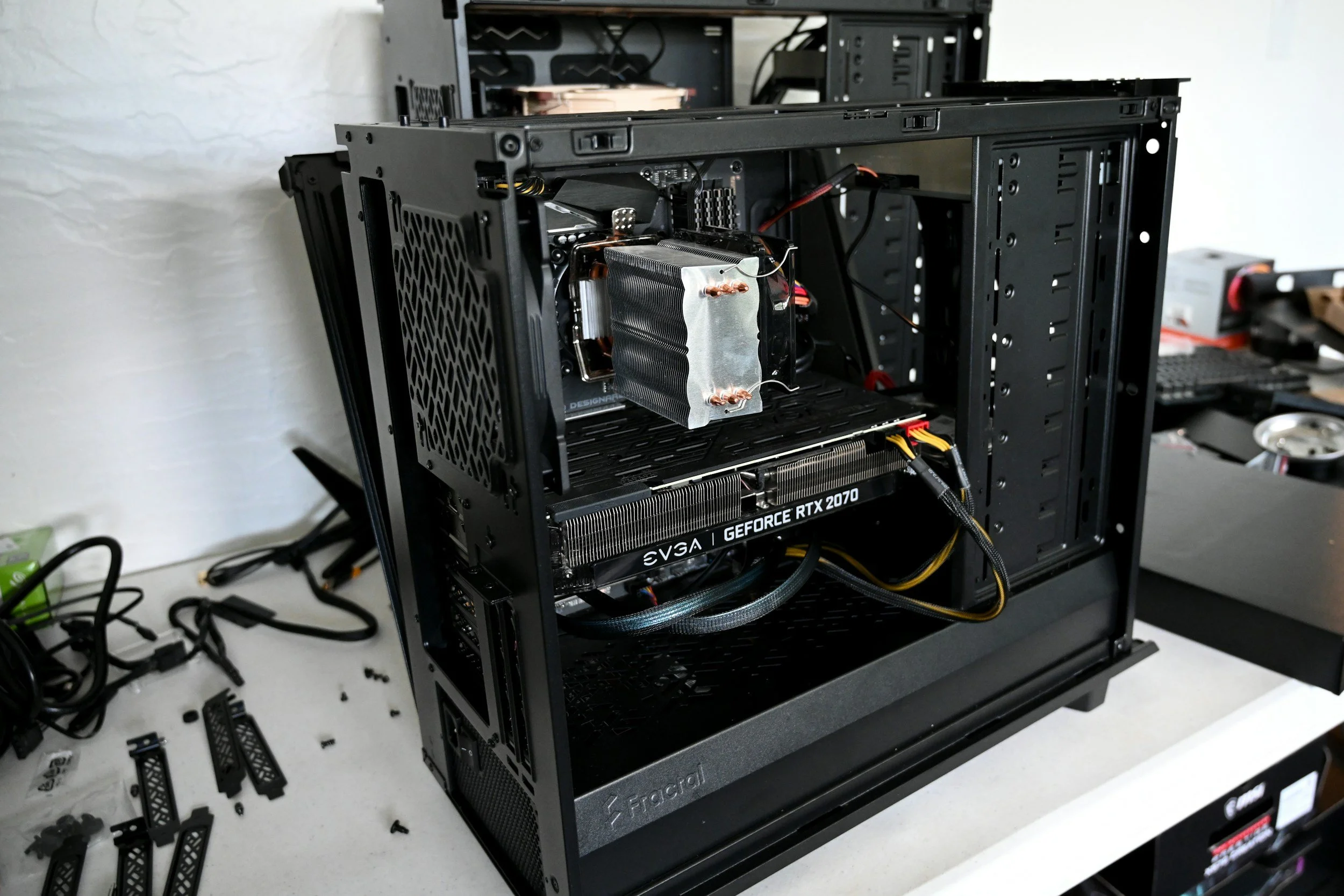
A local AI model, sometimes called a small language model, runs on hardware you control rather than on a provider's servers. That might be a machine in your office or a private instance you own rather than rent. The models are smaller than the headline names, and for most focused business tasks that size is enough. The point isn't raw power. It's that the AI runs inside your business, on your data, without sending it anywhere.
In a nutshell: Local AI is — a small language model running on hardware you control; for most focused tasks the smaller size is enough; it runs inside your business.

The real trade-off: cloud vs local
Cloud AI is genuinely useful, and for light, occasional, general use it remains the easier choice. But it carries three costs that are easy to miss. Your data leaves your business with every prompt. You pay per use, indefinitely, and the cost tends to rise as you rely on it more. And you're tied to whatever the provider changes, in models, features, pricing or terms.
Local AI flips those three. Your data stays inside the business, which matters if you handle sensitive client information or work in a regulated space. The economics change in your favour for consistent use, because you pay an upfront setup rather than a rising per-use fee. And you decide when anything changes, so a provider's update doesn't break your workflow overnight. The model can also be shaped around your business, your tone and your processes, rather than sounding like everyone else's.
In a nutshell: The trade-off (cloud vs local) — cloud usually has three hidden costs (data leaves, pay per use indefinitely, tied to provider changes and price increases); whereas local flips all three (data stays, economics flip for consistent use, you control changes, shaped around your business).
Is it right for you?
A simple way to decide: local AI tends to earn its place where you're doing repetitive, defined tasks on sensitive or proprietary data, often. Customer correspondence in your voice. Document review where confidential contracts never leave the office. Internal knowledge search across your own policies and files. Quoting where your pricing logic stays private.
For genuinely novel reasoning, broad brainstorming, or one-off complex problems, the frontier cloud models still earn their place. The smart pattern for most small businesses is to use both, in their right places, rather than treating one as the whole answer.
Is it right for you? — best for repetitive, defined tasks on sensitive/proprietary data; use both cloud and local in their right places.


The decisions to make at your stage
Whichever way you lean, the useful work is the same three decisions any owner should make about AI: what data each tool can touch, which workflows it sits inside and who reviews its output, and what you've decided AI will not do in your business. Local AI is most worth a serious look when data sensitivity matters, when your AI use is becoming consistent enough to feel the cost, or when you want a tool that genuinely fits how you operate rather than a generic interface.
Where to get support
If you'd like to think through where AI genuinely belongs in your business, including whether local AI is part of the picture, that's exactly the work we do with you in the Lead with AI program. It's where 25eight helps business owners build a deliberate AI approach rather than a pile of tools.
If you'd rather stay close to this thinking first, the 25eight newsletter sends one practical capability idea each week: https://www.25eight.co/newsletter-sign-up